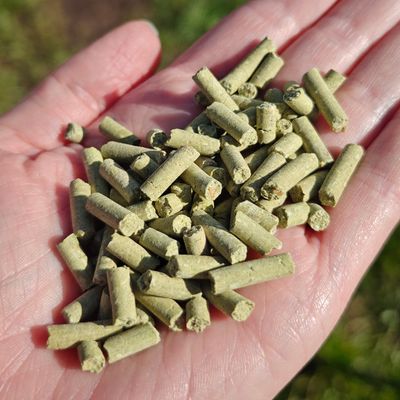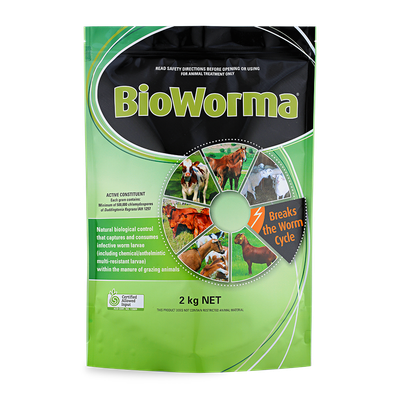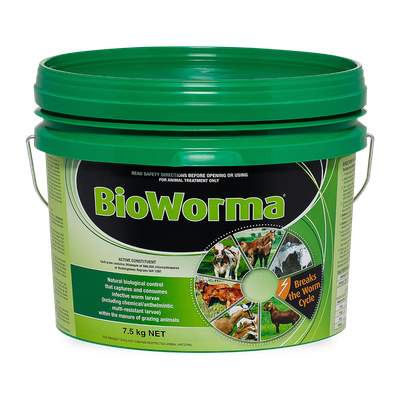
More Than BioWorma® Alone: Unlike BioWorma® on its own, Livamol® with BioWorma® also contains a vitamin and mineral supplement.
Consider Your Animals' Mineral Requirements: An online consultation with Dr Sez is recommended, though not mandatory, to discuss the mineral requirements of your animals and whether Livamol® with BioWorma® is the right option for your situation.
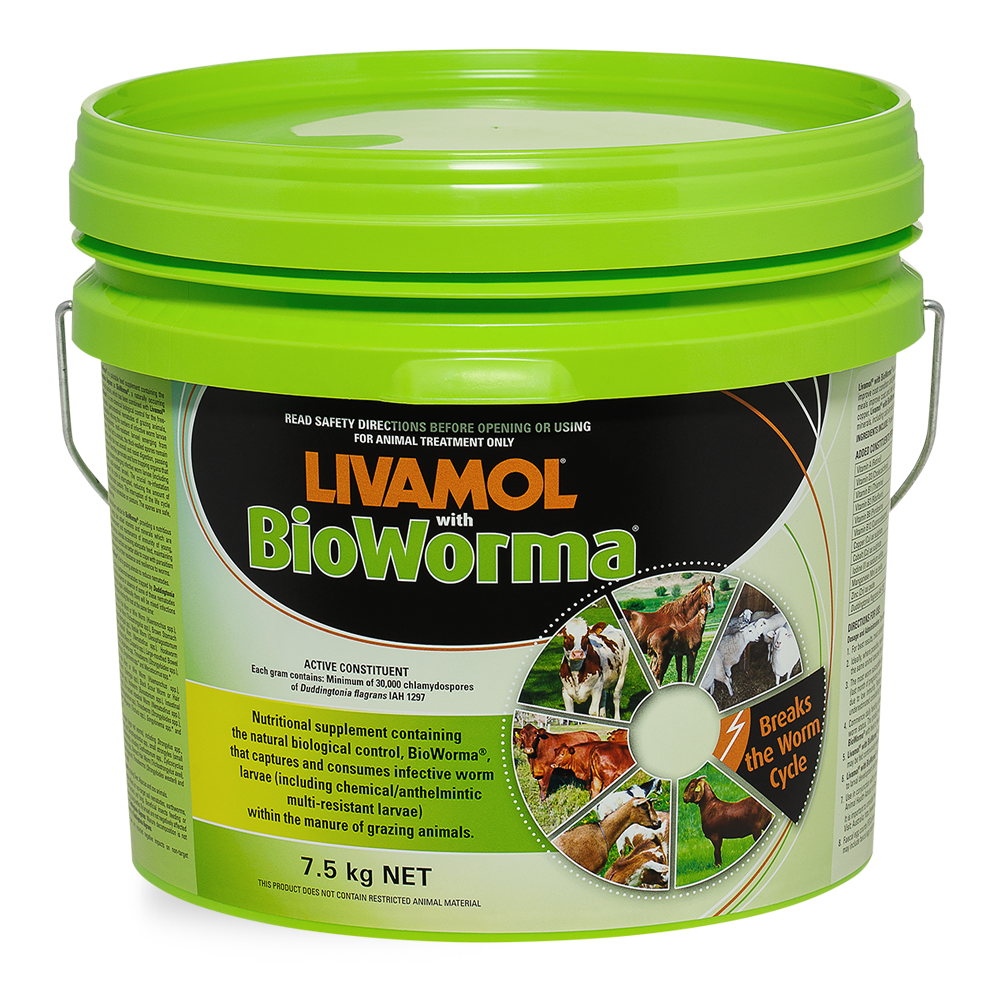
Livamol® with BioWorma®
Livamol® with BioWorma® is a nutritional supplement containing the natural biological control BioWorma®, which captures and consumes infective worm larvae — including chemical-resistant and anthelmintic multi-resistant larvae — within the manure of grazing animals.
When fed to animals, the thick-walled BioWorma® spores remain inert — having no effect within the host animal — and resist digestion, passing through into the manure. There they germinate and form trapping organs that capture, paralyse and consume emerging worm larvae, including chemical and multi-resistant larvae. This interrupts the crucial reinfestation stage of the parasites' life cycle, reducing the amount of re-infection on the pasture.
Biological control with Duddingtonia flagrans is applicable to the larvae of Horses, Cattle, Sheep, Goats and other grazing animals including Deer, Alpacas and Zoo animals.
For more information on BioWorma® and Livamol® with BioWorma®, visit the official BioWorma website.
Visit BioWorma.com →Abridged — see DIRECTIONS FOR USE on label and read carefully.
In-Depth Guidance at BioWorma.com →Treat animals with a suitable chemical wormer.
Move treated animals onto low worm pasture, ideally not grazed by the same animal species for a minimum of 6 weeks.
Commence daily use of Livamol® with BioWorma® to minimise pasture infectivity and maintain the animal's low worm status.
Thoroughly mix Livamol® with BioWorma® with feed or feed supplements. Livamol® with BioWorma® will begin to work immediately within the manure. Feed 50 grams per 50 kg of bodyweight daily.
Recommended for strategic use during periods when weather conditions are conducive to larval development and transmission on pasture at temperatures above 5° Celsius (40° Fahrenheit) throughout the year.
Use in conjunction with a recommended worm management strategy programme for your area by contacting your local vet or Dr Sez from Sez the Vet.
Need further guidance on your worm management strategy? Visit Wormwise for New Zealand guidance, speak with your local vet, or talk to Dr Sez about a strategy tailored to your animals and property.
Contact Dr. Sez →